
๐Ÿช” DIWALI 2026 ADVANCE BOOKING
Booking closes October 15 โ€” order now for guaranteed Diwali delivery
00
DAYS
00
HRS
00
MIN
00
SEC
Book Now

What Is Putharekulu?
India's Most Extraordinary Heritage Sweet - Explained.

A 300-year-old GI-tagged paper sweet from Atreyapuram, Andhra Pradesh. Handcrafted by women artisans. One of India's most protected and celebrated culinary heritages. Here is everything you need to know.

Putharekulu in One Paragraph

Putharekulu โ€” also called Pootharekulu or paper sweet โ€” is a traditional Indian sweet from Atreyapuram village in Konaseema district, Andhra Pradesh. It is made from ultra-thin sheets of rice starch, filled with pure desi ghee, jaggery or sugar, and premium dry fruits, then rolled by hand into delicate cylindrical pieces. With a history of over 300 years, it is one of India's oldest documented sweets โ€” and one of the very few to hold a Geographical Indication (GI) tag from the Government of India, certifying that authentic Putharekulu can only be made in Atreyapuram. No machine can replicate its paper-thin layers. No factory can scale its production without losing what makes it extraordinary. It is handcrafted, certified, and genuinely unlike any other sweet in India.
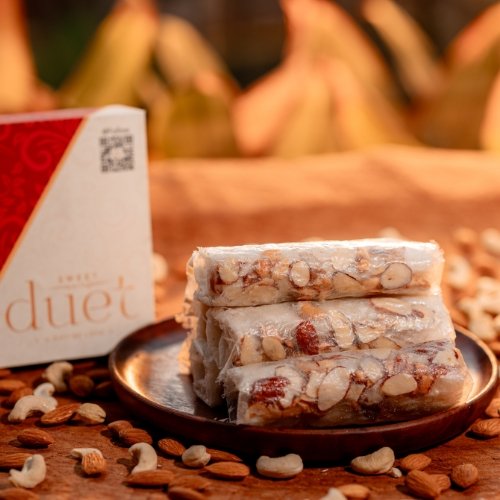

Authentic GI Tagged Atreyapuram Putharekulu by Sweet Duet
Women artisans making authentic GI Tagged Atreyapuram Putharekulu
ORIGIN & HISTORY

The Origin of Putharekulu - Atreyapuram, Andhra Pradesh

Atreyapuram is a small village on the banks of the Godavari River in Konaseema district, East Godavari, Andhra Pradesh. It is not famous for its size or its history of kings and wars. It is famous for one thing - and one thing alone.

Putharekulu has been made in Atreyapuram for over 300 years. The exact origin is undocumented in formal historical records โ€” as is the case with most Indian culinary traditions passed down through generations of artisan families rather than royal courts or textbooks. What is known is that the tradition was established in the 19th century at the latest, with many accounts placing its origins significantly earlier.

The sweet was historically prepared for auspicious occasions โ€” weddings, festivals, and religious ceremonies โ€” within the Telugu community of East Godavari. Its production was a cottage industry, with families specialising in specific aspects of the making process and passing their knowledge to their children.

Today, approximately 400 families in Atreyapuram depend on Putharekulu production as their primary livelihood. More than 500โ€“600 women artisans are involved in crafting the sweet โ€” making it not just a culinary heritage but a living economic tradition that sustains an entire village.

ETYMOLOGY

What Does Putharekulu Mean? The Etymology

The name Putharekulu โ€” more accurately spelled Pootharekulu in Telugu โ€” comes from two Telugu words:

Pootha โ€” meaning coating or thin layer
Rekulu โ€” meaning sheets (singular: reku)

Together: Pootharekulu literally means "coated sheets" โ€” a direct and precise description of what the sweet actually is. Paper-thin rice starch sheets, coated with ghee and sweetness.

In English, the sweet is commonly called a paper sweet โ€” a translation that captures its most immediately recognisable characteristic: layers so thin they are almost translucent, resembling delicate edible paper.

The spelling Putharekulu โ€” used by Sweet Duet and increasingly in national and online contexts โ€” is an English transliteration of the same word. Both Putharekulu and Pootharekulu refer to the same GI-tagged sweet from the same village. The product is identical. Only the transliteration differs.
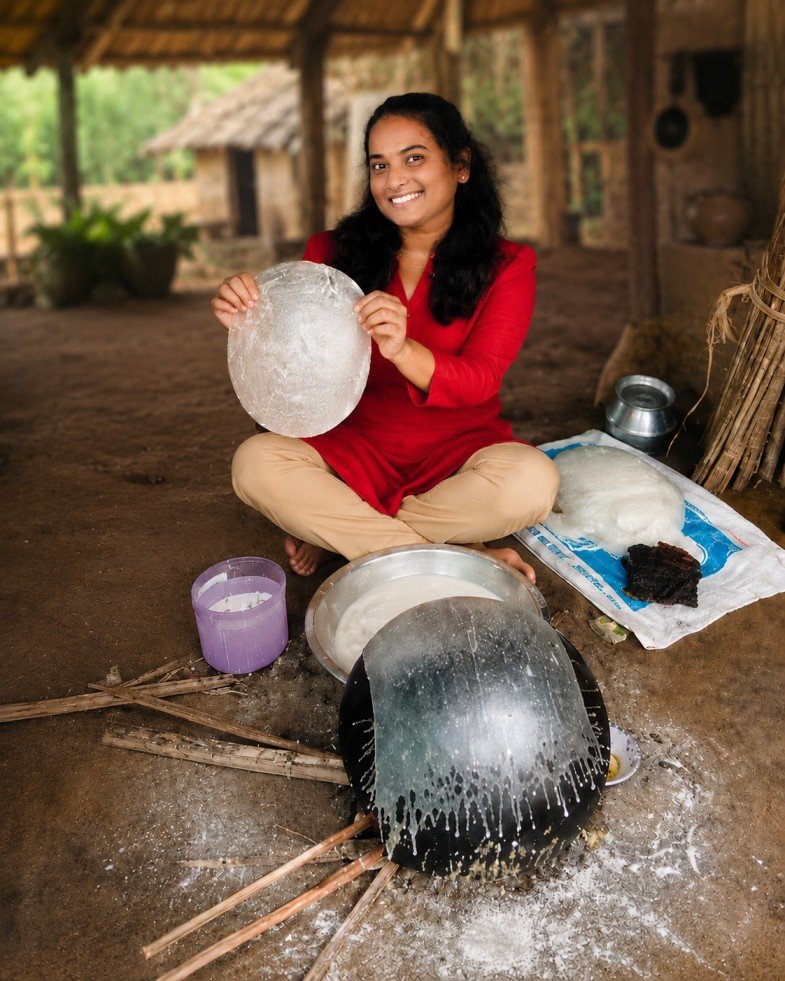

putharekulu sheets making process
GI Tagged atreyapuram putharekulu
GI TAG CERTIFICATION

The GI Tag - What It Means and Why It Matters

On June 14, 2023, the Geographical Indications Registry (GIR) under the Ministry of Commerce and Industry, Government of India, granted the GI tag to Atreyapuram Putharekulu under Certificate No. 483.

The tag is valid until December 2031.

The application was filed in December 2021 by the Sir Arthur Cotton Atreyapuram Putharekula Manufacturers Welfare Association โ€” a body representing the artisan families of Atreyapuram who have made the sweet for generations.

What a GI tag actually means:

A Geographical Indication tag is a legal designation that certifies a product's origin and qualities are exclusively linked to a specific geographic location. Under Indian law, only Putharekulu made in Atreyapuram can be legally called "Atreyapuram Putharekulu."

Darjeeling Tea โ€” the only tea from Darjeeling hills
Basmati Rice โ€” the only rice from specific Himalayan foothills regions
Kanchipuram Silk โ€” the only silk from Kanchipuram
Alphonso Mango โ€” the only mangoes from Ratnagiri

The GI tag does two things simultaneously. It protects the producers of Atreyapuram from imitation products being sold under their name. And it protects the buyer โ€” ensuring that what is labelled "Atreyapuram Putharekulu" is genuinely from Atreyapuram.

What this means when you buy from Sweet Duet:

Every Sweet Duet Putharekulu is sourced from Atreyapuram โ€” the only legally recognised origin. When you buy from us, you buy the GI-certified original โ€” not an imitation made elsewhere and labelled "Atreyapuram style."

HANDCRAFTED PROCESS

How Putharekulu Is Made - The Process That Cannot Be Mechanised

The making of Putharekulu is unlike any other Indian sweet-making process. It cannot be mechanised. It cannot be scaled in a factory. It can only be done by hand โ€” by artisans who have spent years developing the specific sensitivity of touch required to create paper-thin rice starch sheets without breaking them.

1

Rice Soaking

Jaya rice โ€” a specific variety grown in the Godavari region โ€” is soaked overnight in water. The particular properties of Jaya rice are what make it suitable for creating the paper-thin sheets. Other rice varieties do not produce sheets of the same consistency or translucency.

2

Batter Preparation

The soaked rice is ground into a fine, smooth batter. The consistency of the batter โ€” not too thick, not too thin โ€” determines the quality of the sheets. This judgment is entirely by the artisan's experience.

3

Sheet Making

The batter is spread over a heated earthen pot โ€” traditionally wood-fired โ€” in rapid, circular hand motions. The heat instantly cooks the batter into an ultra-thin translucent sheet. Any inconsistency creates thick patches or holes.

4

Peeling

The cooked sheet is peeled carefully from the pot by hand while still warm. This is the most delicate step โ€” a sheet even slightly too thin will tear. A sheet peeled too late becomes brittle. The artisan's timing is everything.

5

Filling & Rolling

The peeled sheet is brushed with pure desi ghee, filled with jaggery or sugar, and layered with premium dry fruits โ€” cashews, almonds, pistachios. The artisan rolls the sheet carefully, maintaining the delicate layered structure.

6

Quality Check

Each finished piece is inspected by hand. Pieces with uneven layers, visible cracks, or compromised texture are removed. Only perfect pieces proceed to the packaging stage.

The entire process โ€” from sheet making to finished piece โ€” takes approximately 4โ€“6 minutes per piece. Every Sweet Duet Putharekulu you receive has passed through these six steps, made by hand, by an artisan who has done this thousands of times.

WHY PUTHAREKULU IS DIFFERENT

How Putharekulu Is Different From Other Indian Sweets

India has hundreds of traditional regional sweets. Putharekulu occupies a unique position among them โ€” for reasons that go beyond taste.

๐Ÿ“œ

The Only Paper Sweet in India

It is the only Indian sweet made from paper-thin rice starch sheets. Kaju Katli is compressed cashew paste. Gulab Jamun is deep-fried dough in sugar syrup. Mysore Pak is a ghee-fudge. Every other famous Indian sweet has parallels in other confectionery traditions. Putharekulu does not. Its paper-thin rice starch base has no equivalent anywhere in Indian or global confectionery. It is genuinely singular.

๐Ÿ›๏ธ

One of the Few GI-Tagged Indian Sweets

Most Indian sweets โ€” however traditional โ€” have no legal protection on their origin. Putharekulu is among a small group of Indian foods protected by Geographical Indication. That places it in the same heritage category as Darjeeling Tea, Basmati Rice, and Kanchipuram Silk as a legally certified heritage product.

๐Ÿคฒ

Entirely Handcrafted โ€” By Definition

Many traditional Indian sweets can now be made by machine at scale. Putharekulu cannot. The paper-thin sheets require hand technique that no machine replicates. Every piece of Putharekulu in the world was made by a human hand. That is not marketing โ€” it is a physical requirement of the process itself.

๐ŸŒพ

A Living Community Tradition

400 families in Atreyapuram. 500โ€“600 women artisans. A GI tag protecting their livelihood. When you buy Putharekulu, you are not just buying a sweet โ€” you are participating in the preservation of a living cultural tradition that sustains an entire village.

Putharekulu is not simply another Indian sweet. It is a protected heritage craft, a living artisan tradition, and one of the few foods in India whose authenticity is legally tied to a single village.

BUY AUTHENTIC GI-TAGGED PUTHAREKULU

Where to Buy Atreyapuram Putharekulu Online

Authentic Atreyapuram Putharekulu is not available in most Indian cities' local sweet shops. Even in Hyderabad and major metros, the Putharekulu available locally is often made outside Atreyapuram without GI certification.

The only way to guarantee you are buying the genuine, GI-certified article is to buy directly from a brand that sources from Atreyapuram.

Sweet Duet sources exclusively from Atreyapuram โ€” the only legally recognised origin for authentic Putharekulu. Every order is made fresh by women artisans from that same tradition, packaged in luxury gifting boxes, and delivered across India and internationally.

๐Ÿ™๏ธ Hyderabad

Same-day delivery available for orders placed before 12 PM.

๐Ÿ“ฆ Bangalore ยท Chennai ยท Mumbai ยท Pune

Express delivery in 2โ€“4 business days.

๐Ÿšš Delhi & NCR

Delivery in 3โ€“5 business days via tracked express courier.

โœˆ๏ธ International Delivery

USA ยท UAE ยท UK ยท Australia ยท Singapore ยท Canada ยท Japan

FREQUENTLY ASKED QUESTIONS

Frequently Asked Questions About Putharekulu

Q1: What is Putharekulu?
Putharekulu is a traditional Indian sweet from Atreyapuram village in Konaseema district, Andhra Pradesh. Made from ultra-thin rice starch sheets filled with pure desi ghee, jaggery or sugar, and premium dry fruits, it has a 300-year history and holds a Government of India GI tag certifying its origin.
Q2: Where does Putharekulu come from?
Putharekulu originates exclusively from Atreyapuram โ€” a village on the banks of the Godavari River in Konaseema district, East Godavari, Andhra Pradesh. The GI tag granted in June 2023 legally confirms that authentic Putharekulu can only be made in Atreyapuram.
Q3: What does Putharekulu mean in Telugu?
Putharekulu comes from two Telugu words โ€” pootha meaning coating or thin layer, and rekulu meaning sheets. Together it means coated sheets โ€” a direct reference to its paper-thin rice starch layers. In English it is called paper sweet.
Q4: When did Putharekulu get its GI tag?
Putharekulu received its GI tag on June 14, 2023, under Certificate No. 483, issued by the Geographical Indications Registry under the Ministry of Commerce and Industry, Government of India. Valid until December 2031.
Q5: What are the ingredients in Putharekulu?
Jaya rice starch sheets, pure desi ghee, jaggery or sugar, and dry fruits โ€” cashews, almonds, pistachios. Zero preservatives. Zero artificial colours. Exotic variants include dates, chocolate, edible silver leaf, and edible gold leaf.
Q6: What is the difference between Putharekulu and Pootharekulu?
Both are the same sweet. Pootharekulu is the Telugu spelling. Putharekulu is the English transliteration. No difference in the product.
Q7: How is Putharekulu made?
Rice batter is spread over a heated earthen pot into paper-thin sheets, peeled by hand, brushed with ghee, dusted with jaggery or sugar, layered with dry fruits, and rolled into cylindrical pieces. The entire process is handmade โ€” no machine can replicate the paper-thin sheet technique.
Q8: How long does Putharekulu stay fresh?
20 days at room temperature. 40 days refrigerated in an airtight container. Bring to room temperature before serving for best texture.

๐Ÿช” DIWALI 2026 EARLY ACCESS

Get First Access to Our
Diwali Collections

Be first to know when Diwali 2026 gifting launches โ€” exclusive offers straight to your inbox.

๐ŸŽ‰ You are on the list!

Watch your inbox for Diwali 2026 early access.

No spam. Unsubscribe anytime. Sweet Duet โ€” GI-tagged Putharekulu.