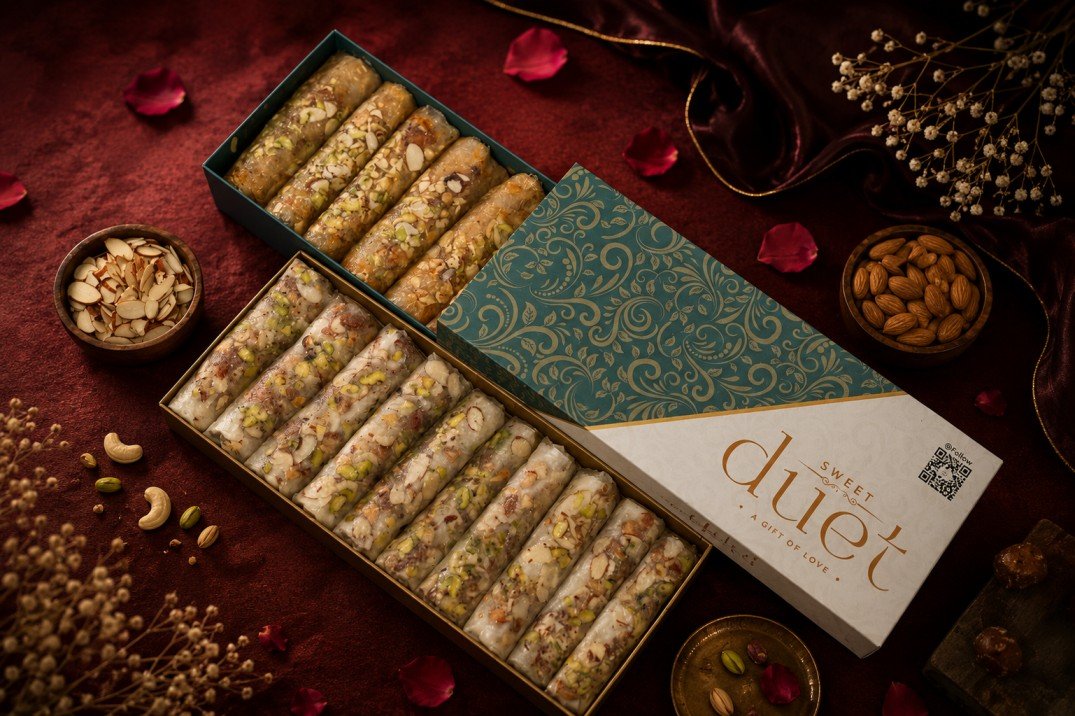
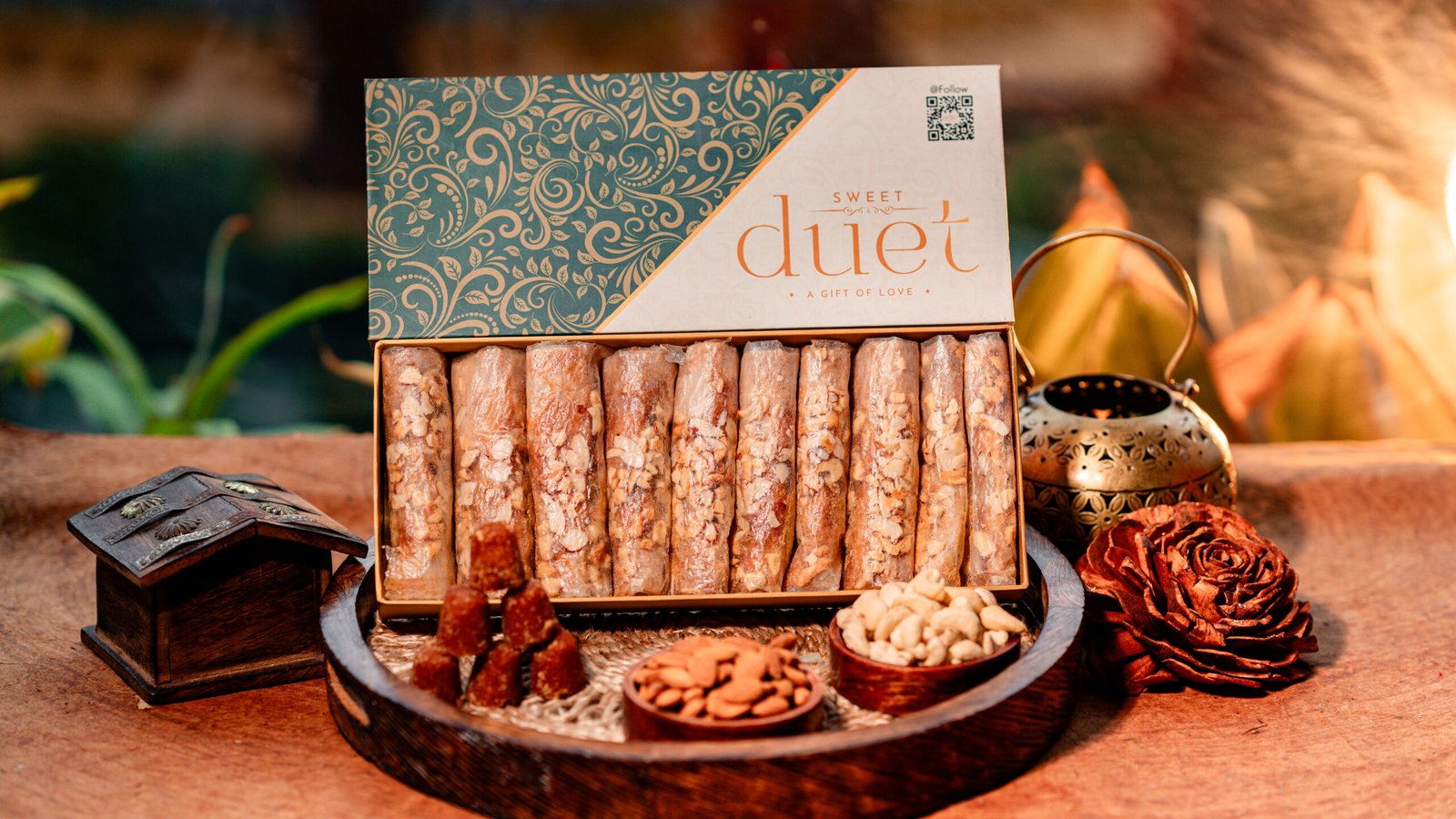
Atreyapuram, Village Where India's Most Extraordinary Sweet Is Born
There is a village in East Godavari, Andhra Pradesh,that most Indians have never heard of. It sits on the banks of the Godavari River, unremarkable in size, unrecorded in most history books. But it makes something no other place in the world can make.
For over 300 years, the women of Atreyapuram have been creating Putharekulu — paper-thin rice starch sheets so delicate they dissolve on the tongue, filled with pure ghee and premium dry fruits, rolled by hand in a process that cannot be mechanised, cannot be replicated, and cannot be taught from a recipe book. This is their story.
A Village Built Around One Sweet
Atreyapuram is not a tourist destination. It is not on any heritage circuit. But within the Telugu community, and increasingly among food lovers across India, it is known for exactly one thing.
More than 400 families in Atreyapuram depend on Putharekulu production as their primary livelihood. Over 500 to 600 women are directly involved in making the sweet – from preparing the rice batter to peeling the paper-thin sheets to rolling the
finished pieces by hand.
There is no factory. There is no assembly line. Every piece of Putharekulu made in Atreyapuram is made by a human hand, in a home, by a woman who learned from her mother, who learned from her mother before her. That is not a marketing claim. That is the economic and social reality of Atreyapuram.
The Art That Passes From Mother to Daughter
In Atreyapuram, a girl does not learn to cook before she learns to make rice paper. The ability to spread Jaya rice batter across a heated earthen pot in one smooth, even, circular motion, thin enough to be translucent, thick enough not to tear
when peeled is the foundational skill of the village.
It takes years to master. Even experienced artisans occasionally tear a sheet. The batter must be exactly the right consistency. The pot must be exactly the right temperature. The motion must be exactly the right speed. There is no measuring instrument for any of these. The artisan’s hands are the instrument. This knowledge exists nowhere written down. It lives in the hands of the women of Atreyapuram, passed from generation to generation through demonstration, practice, and patient correction. When you hold a piece of Putharekulu, you are holding the accumulated knowledge of generations of women who devoted their lives to perfecting this single, extraordinary technique.
Why Nobody Else Can Make Putharekulu
Many have tried to replicate Putharekulu outside Atreyapuram. Factories in Hyderabad. Sweet shops in Chennai. Home kitchens across the Telugu diaspora. None have succeeded in producing the same result. There are three reasons the replication always fails. The first is the rice. Jaya rice – grown in the Godavari delta region – has specific starch properties that produce the translucent, paper-thin sheets Putharekulu requires. Other rice varieties produce sheets that are either too thick, too brittle, or too opaque to achieve the same texture.
The second is the water. The Godavari river water and the specific humidity conditions of East Godavari district affect the drying process of the rice paper in ways that are difficult to quantify but consistently reported by artisans who have attempted production
in other locations.
The third and most important is the hands. The technique for spreading the batter, judging the temperature, peeling the sheet at exactly the right moment, and rolling the finished piece without cracking the paper is not something that can be learned from instruction. It requires years of practice under the guidance of someone who already knows.
These three factors together are why the Government of India granted Atreyapuram Putharekulu aGeographical Indication tag – legally recognising that this sweet can only authentically come from this specific place.
The Fight for the GI Tag – A Community’s Journey
For most of its 300-year history, Putharekulu had no legal protection. Any sweet shop anywhere in India could label their product “Atreyapuram Putharekulu” regardless of where it was actually made.The artisan families of Atreyapuram watched imitation products undercut their prices, mislead buyers, and dilute the reputation of a sweet they had dedicated their lives to making correctly.
In December 2021, the Sir Arthur Cotton Atreyapuram Putharekula Manufacturers Welfare Association,representing the artisan families of the village, filed an application with the Geographical Indications Registry under the Ministry of Commerce and Industry, Government of India.
The application documented the history, the technique, the geographic specificity, and the economic dependence of an entire village on this single product. On June 14, 2023, the GI tag was officially granted. Certificate No. 483. Category: Food Ingredients. Valid until December 2031.
For the women of Atreyapuram, this was not just a legal milestone. It was recognition, after 300 years — that what they make is genuinely extraordinary, genuinely irreplaceable, and genuinely worth protecting.
What the GI Tag Means for You as a Buyer
When you buy GI-tagged Atreyapuram Putharekulu, you are not just buying a sweet. You are buying a legal guarantee that what you are holding was made in Atreyapuram — by artisan families whose livelihood depends on making it correctly. Not a factory version. Not an imitation. The original.
You are also participating in the preservation of a living tradition. Every authentic Putharekulu purchase supports the 400 families and 500 women artisans of Atreyapuram directly, keeping a 300-year-old craft economically viable for the
next generation.
The alternative, buying imitation Putharekulu from brands that source outside Atreyapuram or manufacture without GI certification, does the opposite. It undermines the very community that created and sustained this extraordinary sweet for three centuries.
Sweet Duet sources exclusively from Atreyapuram. Every box we sell is GI-tagged. Every purchase you make from us goes back to the village that made this sweet what it is.
Sweet Duet and Atreyapuram – Why We Chose This Sweet
Sweet Duet was founded by Shahanaz with one conviction – that Atreyapuram Putharekulu deserves to be presented at the level of the world’s finest artisan foods. Not in plastic packets at a sweet shop counter. Not in generic boxes shipped from warehouses. In luxury gifting collections, made fresh per order, delivered with the same care that the women of Atreyapuram put into making them.
Our relationship with Atreyapuram is not transactional. We source from artisan families who have been making Putharekulu for generations. We make every order fresh – because Putharekulu made today and eaten this week is a fundamentally different experience from Putharekulu that sat in storage for a month.
When you order from Sweet Duet, you are not just receiving a sweet. You are receiving the work of women who have dedicated their lives to mastering one of the most extraordinary food crafts in India, presented in packaging designed for the moment
it deserves.
The Sweet That Cannot Be Replaced
India has hundreds of traditional regional sweets. Most are beautiful. Many are delicious. None are made quite like Putharekulu. The paper-thin rice starch layers. The pure ghee filling. The premium dry fruits. The hand-rolled assembly. The Godavari river water. The Jaya rice. The 300 years of accumulated artisan knowledge. Remove any one of these elements and you no longer have Putharekulu. You have something else, something that might taste similar but carries none of the story, none of the provenance, none of the extraordinary specificity that makes this sweet what it is.
The GI tag is not just a legal document. It is a recognition that some things cannot be replicated. Some places cannot be replaced. Some knowledge, once lost, cannot be recovered.
Atreyapuram is one of those places. Putharekulu is one of those things. Support it while it thrives.Experience Authentic Atreyapuram Putharekulu
Sweet Duet brings GI-tagged Atreyapuram Putharekulu to your door – made fresh by women artisans,
packaged for luxury gifting, delivered pan-India.
Shop Putharekulu Collections
→ What Is Putharekulu? Complete Guide
→ Corporate & Wedding Gifting
Frequently Asked Questions –
Atreyapuram and Its Putharekulu Tradition
Q1: Where exactly is Atreyapuram located?
Atreyapuram is a village on the banks of the Godavari River in Konaseema district, East Godavari, Andhra Pradesh. It sits
approximately 50 km from Rajamahendravaram (Rajahmundry). The village is unremarkablein size but globally recognised among food lovers and the Telugu community for one extraordinary product — Putharekulu.
Q2: How many families in Atreyapuram make
Putharekulu?
Approximately 400 families in Atreyapuram depend on Putharekulu production as their primary livelihood. Over 500 to 600 women artisans are directly involved in the making process — from preparing the rice batter to peeling the paper-thin sheets to hand-rolling the finished pieces. Putharekulu production is not just a cottage industry — it is the economic backbone of the entire village.
Q3: When did Atreyapuram Putharekulu receive
its GI tag?
Atreyapuram Putharekulu received its Geographical Indication tag on June 14, 2023, under Certificate No. 483, issued by the Geographical Indications Registry under the Ministry of Commerce and Industry, Government of India. The application was filed in December 2021 by the Sir Arthur Cotton Atreyapuram Putharekula Manufacturers Welfare Association. The GI tag is valid
until December 2031.
Q4: Why can Putharekulu only be made in
Atreyapuram?
Three factors make Atreyapuram irreplaceable for authentic Putharekulu production. First, Jaya rice – grown specifically in the Godavari delta – has unique starch properties that produce the paper-thin translucent sheets no other rice variety can replicate. Second, the specific humidity and water conditions of East Godavari affect the drying process in ways difficult to reproduce elsewhere. Third and most critically the hand technique required to spread, peel, and
roll the paper-thin sheets takes years to master under the guidance of experienced artisans. This knowledge lives in the hands of Atreyapuram’s women – passed from mother to daughter for over 300 years.
Q5: What did the GI tag mean for Atreyapuram’s
artisan community?
The GI tag granted in June 2023 was a landmark moment for Atreyapuram’s artisan families. For decades, imitation Putharekulu
made outside the village was sold under the Atreyapuram name – undercutting authentic producers and misleading buyers. The GI tag legally protects the origin certification, meaning only Putharekulu made in Atreyapuram can be called authentic Atreyapuram Putharekulu. This protects the livelihoods of 400 families and gives buyers a verifiable guarantee of authenticity for the first time in the sweet’s 300-year history.
Q6: How does buying from Sweet Duet support
Atreyapuram’s artisans?
Sweet Duet sources exclusively from Atreyapuram – working directly with women artisan families who have been making Putharekulu for generations. Every Sweet Duet order is made fresh by these artisans after you place it – not pre-packed in a factory or sourced from a middleman. When you buy from Sweet Duet, your purchase goes directly back to the village and the families that created and sustained this extraordinary tradition for 300 years.