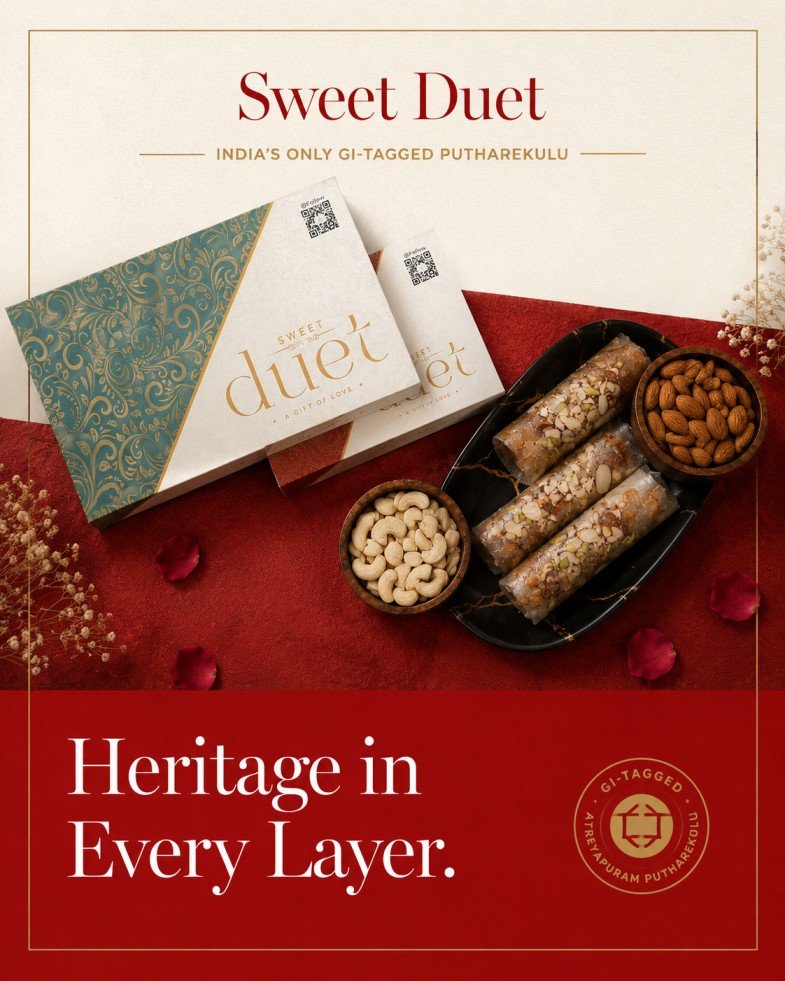
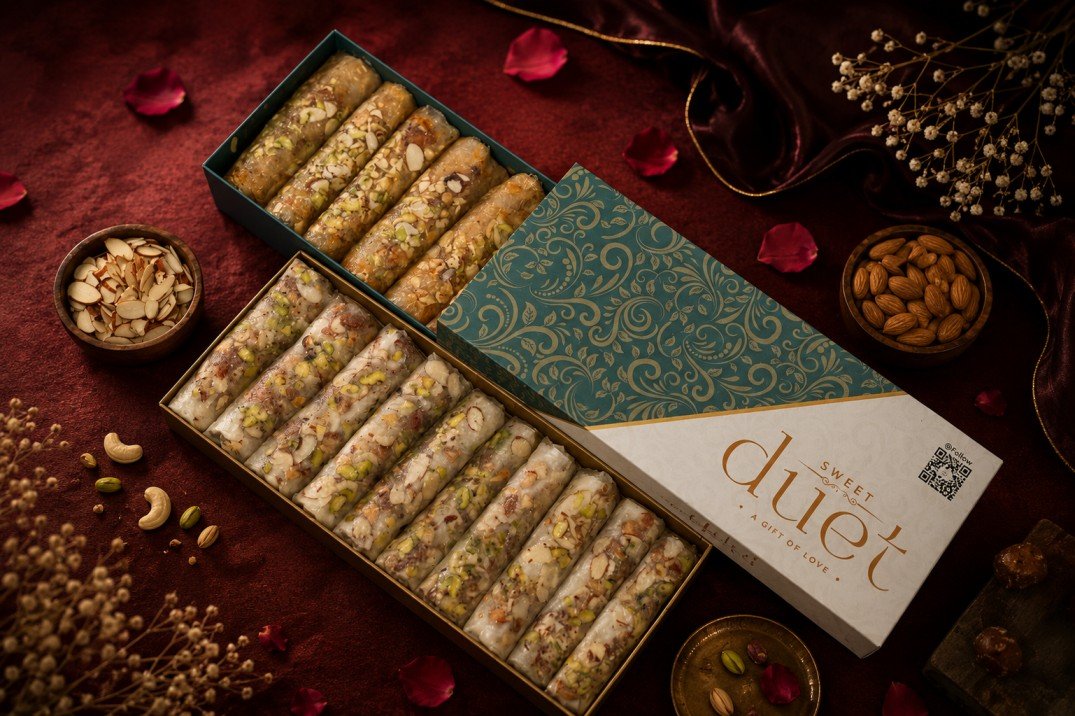
Is Putharekulu Healthy? The Complete Nutritional Guide (2026)
Most people who love putharekulu have never stopped to ask whether it is actually good for them.
The answer is more nuanced than a simple yes or no and it depends entirely on which variant you are eating, what the ingredients are, and how they were sourced.
As the founder of Sweet Duet, India’s only GI-tagged luxury Atreyapuram putharekulu brand, I have spent years researching not just the heritage of this sweet but the nutritional reality of every ingredient that goes into it. This guide covers what putharekulu actually contains, what the research says about each ingredient, and which variant is right for your health goals.
What is Putharekulu Made Of?
Authentic Atreyapuram putharekulu contains four core ingredients:
1. Rice paper (Jaya rice starch) The outer layer of putharekulu is made from Jaya rice a short-grain variety grown in the Krishna-Godavari delta region of Andhra Pradesh. The rice is soaked, ground into a fine batter, and spread on an inverted pot over steam to form paper-thin sheets. No maida. No wheat. No artificial thickeners.
This makes authentic putharekulu naturally gluten-free suitable for people with gluten sensitivity or wheat intolerance. However, it is important to note that putharekulu is made in a traditional kitchen environment, not a certified gluten-free facility, so those with severe celiac disease should exercise caution.
Rice starch is easily digestible. It is light on the stomach compared to wheat-based sweets like maida-heavy gulab jamun or besan-heavy ladoo. The thin rice paper contributes minimal calories relative to the filling.
2. Ghee (Clarified butter) Ghee is applied during the rolling process to bind the layers and add richness. Sweet Duet uses pure ghee cow ghee or buffalo ghee based on customer preference.
Ghee has been rehabilitated by modern nutritional research after decades of being wrongly demonised. Key facts about ghee:
- Rich in butyric acid a short-chain fatty acid that supports gut lining health and reduces intestinal inflammation
- Contains fat-soluble vitamins A, D, E, and K which support immunity, bone health, and skin
- Has a high smoke point making it stable and non-toxic at cooking temperatures unlike refined vegetable oils
- Lactose and casein free suitable for most people with dairy sensitivity
The quantity of ghee in putharekulu is small applied as a thin coating during rolling, not used as a base like in halwa or barfi. This means you get the benefits of ghee without excessive fat loading.
3. Sweetener Jaggery, Sugar, or Stevia This is the most important variable in putharekulu’s health profile. The sweetener determines everything glycemic impact, calories, suitability for diabetics.
Jaggery putharekulu: Jaggery is unrefined cane sugar. Unlike refined white sugar which is stripped of all nutrients during processing, jaggery retains iron, magnesium, potassium, and small amounts of calcium. It has a slightly lower glycemic index than refined sugar approximately 84 compared to white sugar’s 100 though it is still a sugar and should be consumed in moderation.
Jaggery also contains antioxidants that help neutralise free radicals. For people without diabetes or blood sugar conditions, jaggery putharekulu is a significantly better choice than most commercial Indian sweets made with refined sugar, artificial colours, and preservatives.
Sugar putharekulu: Uses refined white sugar powder. Cleaner taste, slightly lighter texture. Less nutritionally complex than jaggery but still free of preservatives and artificial additives when made authentically.
Stevia putharekulu (Sweet Duet exclusive): Sweet Duet offers India’s only GI-tagged putharekulu sweetened with natural stevia extract. Stevia is a plant-derived sweetener with a glycemic index of zero. It does not raise blood sugar, does not contribute calories, and is safe for diabetics, pre-diabetics, and people on calorie-controlled diets.
This variant was developed specifically for health-conscious buyers and diabetic customers who love putharekulu but cannot eat sugar. ATPU and other brands use sucralose an artificial sweetener derived from chemical processing of sugar. Sweet Duet uses stevia a natural plant extract with no artificial processing.
4. Dry fruits (in dry fruit variants) Cashews, almonds, pistachios, and raisins are added as filling in dry fruit putharekulu. These are not decorative they are nutritionally significant.
- Cashews: Rich in magnesium, zinc, and heart-healthy monounsaturated fats
- Almonds: High in vitamin E, calcium, and fibre one of the most nutrient-dense nuts
- Pistachios: Rich in antioxidants, lutein, and plant protein
- Raisins: Natural iron source, supports haemoglobin
Dry fruit putharekulu is the most nutritionally complete variant combining the digestive ease of rice paper, the gut benefits of ghee, and the micronutrient density of mixed nuts.
Caloric Reality How Many Calories is One Putharekulu?
A single piece of putharekulu contains approximately 80 to 120 calories depending on the variant and size:
- Plain jaggery putharekulu (small): ~80-90 calories
- Sugar putharekulu (standard): ~85-100 calories
- Dry fruit putharekulu (standard): ~120-150 calories
- Stevia putharekulu: ~60-70 calories (no sugar calories)
For context one gulab jamun contains approximately 150 calories. One piece of kaju katli contains approximately 100-120 calories. One rasgulla contains approximately 100 calories.
Putharekulu is not a low-calorie food no traditional Indian sweet is. But calorie-for-calorie, it is among the cleaner options because it contains no artificial additives, no maida, no hydrogenated fats, and no refined sugar when made with jaggery or stevia.
Who Should Eat Which Variant?
If you are healthy with no dietary restrictions: Start with jaggery putharekulu. The natural sweetener, ghee, and rice paper combination is the most authentic and nutritionally balanced version. Dry fruit variant adds micronutrient value.
If you are diabetic or pre-diabetic: Stevia putharekulu from Sweet Duet is specifically designed for you. Zero glycemic index sweetener, same authentic Atreyapuram recipe, same Jaya rice paper made by hereditary artisans. This is the only stevia putharekulu available from a GI-tagged brand in India. Order stevia putharekulu here →
If you are gluten-sensitive: All putharekulu variants use Jaya rice paper no wheat, no maida. Putharekulu is naturally gluten-free by ingredient composition.
If you are health-conscious but not diabetic: Jaggery dry fruit putharekulu is your variant. Jaggery over refined sugar, dry fruits for micronutrients, ghee for fat-soluble vitamins. A sweet you can feel good about.
If you are buying as a gift for an elderly relative: Stevia variant for diabetics. Jaggery variant for non-diabetics. Both are preservative-free, made fresh, and free of artificial colours appropriate for people who are particular about what they eat.
What Makes Sweet Duet’s Putharekulu Healthier Than Generic Versions
Not all putharekulu is equal from a health perspective. Here is what differentiates Sweet Duet’s sourcing:
No preservatives guaranteed. Our putharekulu has a natural shelf life of 15-20 days. Products claiming 30-60 day shelf life without refrigeration contain preservatives. We do not.
No artificial colours. Authentic putharekulu is pale white to cream in colour. Any putharekulu that appears bright yellow or orange has artificial colour added. Ours contains none.
Made fresh per order. We do not stock pre-made inventory in a warehouse. Every order triggers fresh production by our artisan families in Atreyapuram. You receive putharekulu made within days of your order, not weeks.
GI-certified sourcing. Our putharekulu is made by Durga’s family and Shiva’s team hereditary artisans whose families have been making this sweet for generations using Jaya rice from the Krishna-Godavari delta. The GI tag is not a marketing claim. It is a government-certified geographic and process verification.
Natural stevia not sucralose. For our sugar-free variant, we use natural stevia extract. Other brands use sucralose, an artificial sweetener made through chemical chlorination of sugar. Stevia comes from a plant. The difference matters for long-term health.
Founder’s Observation
By Shahanaz Policherla, Founder – Sweet Duet
When I started researching putharekulu seriously before Sweet Duet existed one of the first things I noticed was how light I felt after eating authentic Atreyapuram putharekulu compared to other Indian sweets.
I later understood why. The rice paper is naturally easy to digest. The ghee quantity is restrained just enough to bind and enrich, not enough to feel heavy. The jaggery releases energy gradually rather than causing the immediate sugar spike and crash you get from refined sugar.
What bothered me about the market was how many “putharekulu” products were being sold with preservatives that extended shelf life to 45 or 60 days. A sweet that can sit in a box for two months without spoiling is not a fresh traditional sweet. Something has been added to make that possible.
Sweet Duet’s commitment is simple: we make it fresh, we use natural ingredients, and we do not add anything that the original recipe does not call for. The stevia variant came from a real need too many of our customers were diabetic and could not eat the jaggery or sugar versions. Natural stevia was the right answer. Not sucralose. Not artificial sweetener tablets. A plant-derived ingredient that preserves the spirit of natural, clean food.
That is the health philosophy behind every box we send.
The Bottom Line
Putharekulu is one of the healthiest traditional Indian sweets available when made authentically rice paper base, natural sweetener, pure ghee, real dry fruits, zero preservatives, zero artificial colours.
It is not a diet food. No traditional sweet is. But compared to most commercial Indian mithai loaded with maida, refined sugar, artificial colours, and chemical preservatives, authentic GI-tagged Atreyapuram putharekulu from a verified source is a genuinely cleaner choice.
For diabetics specifically Sweet Duet’s stevia putharekulu is the first and only option from a GI-tagged brand that does not compromise on authenticity while removing refined sugar completely.
Browse all putharekulu variants → Order stevia putharekulu for diabetics → Learn what makes Atreyapuram putharekulu different →
Frequently Asked Questions
Is putharekulu healthy to eat? Authentic putharekulu made with Jaya rice paper, pure ghee, natural jaggery, and dry fruits is one of the healthier traditional Indian sweets. It contains no maida, no artificial colours, and no preservatives when made authentically. However it is a sweet and should be consumed in moderation as part of a balanced diet.
How many calories does one putharekulu have? One piece of putharekulu contains approximately 80 to 150 calories depending on the variant and size. Plain jaggery putharekulu contains around 80-90 calories per piece. Dry fruit putharekulu contains 120-150 calories. Stevia putharekulu contains approximately 60-70 calories per piece with zero sugar calories.
Is putharekulu gluten free? Yes. Authentic putharekulu is made from Jaya rice starch no wheat, no maida. It is naturally gluten-free by ingredient composition. However it is produced in traditional kitchen environments, not certified gluten-free facilities.
Can diabetics eat putharekulu? Diabetics should avoid jaggery and sugar putharekulu due to their sugar content. Sweet Duet offers stevia putharekulu made with natural stevia extract, zero refined sugar, and zero glycemic index. This is the only stevia putharekulu available from a GI-tagged Atreyapuram brand in India and is safe for most diabetics. Consult your doctor before adding any sweet to a diabetic diet.
Is jaggery putharekulu better than sugar putharekulu? From a nutritional standpoint, yes. Jaggery is unrefined and retains iron, magnesium, potassium, and antioxidants that are stripped from refined white sugar during processing. Jaggery also has a slightly lower glycemic index than refined sugar. For non-diabetics choosing between variants, jaggery putharekulu is the more nutritionally complex option.
What dry fruits are in putharekulu? Sweet Duet’s dry fruit putharekulu contains cashews, almonds, pistachios, and raisins. These provide healthy fats, protein, vitamin E, magnesium, and antioxidants making dry fruit putharekulu the most nutritionally complete variant.
Is putharekulu better than other Indian sweets? Compared to most commercial Indian sweets made with maida, refined sugar, hydrogenated fats, artificial colours, and preservatives authentic putharekulu is a significantly cleaner option. Its rice paper base is easier to digest than flour-based sweets. The ghee content is restrained. When made with jaggery and without preservatives, it is among the most naturally made traditional sweets available.
Does Sweet Duet’s putharekulu contain preservatives? No. Sweet Duet putharekulu contains zero preservatives and zero artificial colours. It is made fresh per order with a natural shelf life of 15-20 days at room temperature.