Why Atreyapuram Putharekulu is Different From Regular Putharekulu
If you have ever tasted a putharekulu that felt too thick, too sweet, or somehow flat you have tasted a regular putharekulu, not an Atreyapuram one.
The difference is not branding. It is not packaging. It is geography, hereditary craft knowledge, a specific variety of rice, and a precision of hand that cannot be trained in weeks or months.
This is what separates authentic Atreyapuram putharekulu from everything else sold under the same name.
What Most People Do Not Know About Putharekulu
Putharekulu is increasingly popular across India. You can now find versions of it in sweet shops in Hyderabad, Bangalore, Chennai, and Mumbai. You can find it on large ecommerce platforms shipped from warehouses.
But most of what is sold as putharekulu today is not Atreyapuram putharekulu.
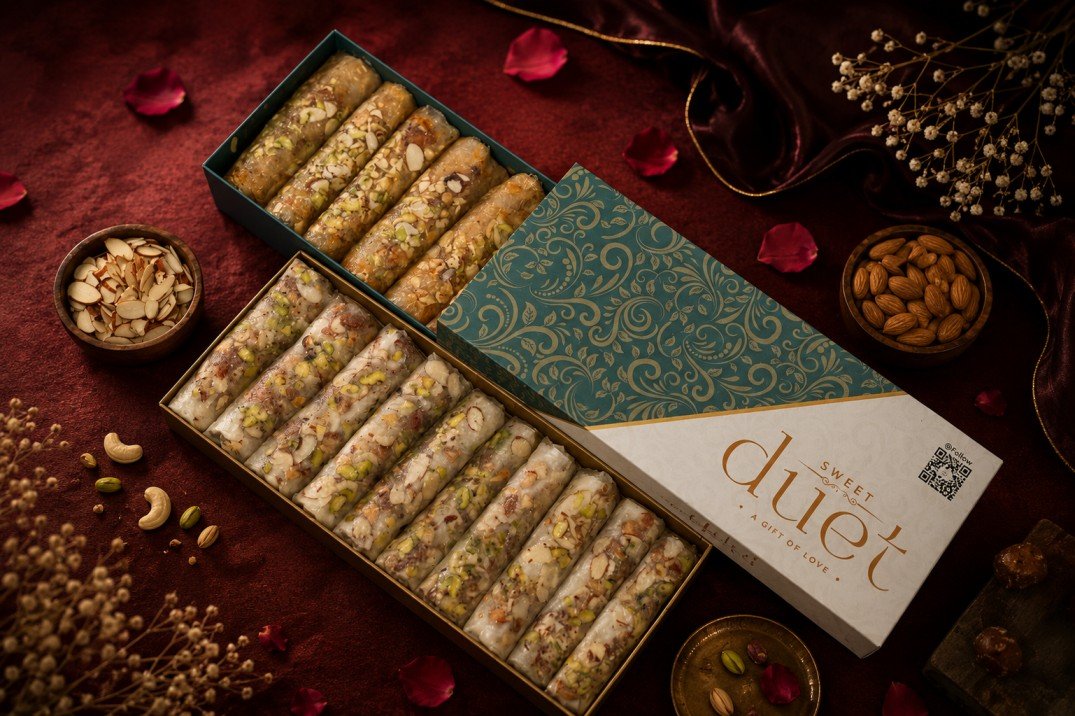
It looks similar. It has the same cylindrical rolled shape. It may even carry the same name on the label.
The difference is in what you cannot see the rice variety, the hand that made it, the family that taught that hand, and the village where this knowledge has lived for over three centuries.
The Village That Owns This Sweet
Atreyapuram is a small village in the East Godavari district of Andhra Pradesh. It sits on the banks of the Godavari river. It is not a famous city. It does not have an airport. Most people outside Andhra Pradesh have never heard of it.
But among those who know Indian sweets deeply, Atreyapuram is known for one thing only: putharekulu.
The sweet has been made here for generations. Families passed the craft from parent to child the way a goldsmith passes metalwork not through written recipes, but through years of watching, assisting, and eventually doing.
The Government of India recognised this in 2022, granting Atreyapuram putharekulu a Geographical Indication (GI) tag the same category of protection given to Darjeeling tea, Kanchipuram silk, and Alphonso mangoes. This tag legally means that authentic Atreyapuram putharekulu can only come from Atreyapuram, made by its hereditary artisans.
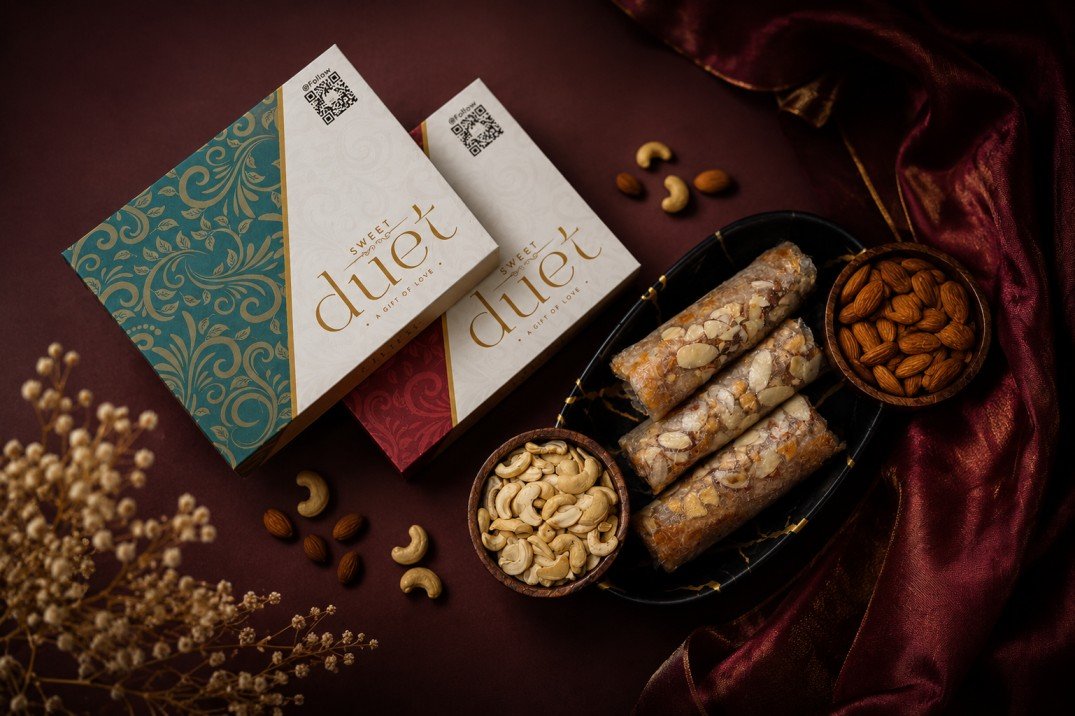
Sweet Duet is India’s only GI-tagged luxury Atreyapuram putharekulu brand. Every box we sell is made by artisan families from Atreyapuram not a factory, not a central kitchen, not a scaled production unit.
The Rice Paper: Thinner Than Paper Itself
The outer layer of a putharekulu is called the rice paper. It is made from Jaya rice a short-grain variety grown in the Krishna-Godavari delta region of Andhra Pradesh.
Jaya rice has specific starch properties that allow it to be processed into sheets so thin they are translucent. When held up to light, you can see through them.
Describing how thin is difficult. The closest comparison is this: a standard sheet of office paper is approximately 0.1 millimetres thick. Authentic Atreyapuram rice paper is thinner than that.
This thinness is not cosmetic. It determines the texture of every bite. A thicker rice paper makes the putharekulu feel doughy or heavy. The authentic version almost dissolves as you eat it the rice paper and the filling arrive together, not in sequence.
Making rice paper this thin requires skill that takes years to develop. It cannot be done by machine at this quality level. It is entirely handmade.
When you buy putharekulu from a general sweet shop or an uncertified online seller, the rice paper is almost always thicker because thinner paper tears during handling and requires more careful production. The compromise on thinness is a compromise on authenticity.
The Artisans: Hereditary Knowledge, Not Trained Labour
Sweet Duet works with two artisan families from Atreyapuram.
The first is Durga’s family. Durga learned this craft from her mother, who learned it from hers. The knowledge in her hands is not from a training programme it is inherited, refined over a lifetime of daily practice.
The second is Shiva’s family. Shiva learned from his father. He now leads a team of more than 30 artisans. In Atreyapuram, putharekulu is not a side business or a seasonal activity. For families like Shiva’s, it is the primary livelihood, practiced every day across generations.
This matters because putharekulu is not a sweet you can standardise easily. Every batch of rice paper behaves slightly differently depending on humidity. Every filling jaggery, dry fruits, ghee requires adjustment based on the day’s conditions.
Hereditary artisans know how to read these variables. They have done it thousands of times.
The Precision That Cannot Be Taught in a Manual
One of the most important differences between authentic Atreyapuram putharekulu and imitations is what happens during filling.
There is no measuring cup. There is no digital scale at the rolling station. The artisan holds the rice paper sheet, adds jaggery powder, adds dry fruits, applies ghee and rolls.
What makes this remarkable is the consistency. Durga’s family and Shiva’s team produce putharekulu where every piece has the same weight of jaggery, the same quantity of dry fruits, and the same ghee coverage not because they measure, but because their hands have done this so many times that the measurement is encoded in their muscle memory.
Too little jaggery and the putharekulu tastes flat. Too much and it becomes dense and overpowering. Too much ghee and the rice paper softens too quickly. Too little and the layers do not hold together properly.
This calibration learned through years of practice under a parent or a master is what you are buying when you buy authentic Atreyapuram putharekulu. You are buying the result of a knowledge system that took decades to develop.
No factory can replicate this. No automated line can encode it.
How Sweet Duet Came to Source From Atreyapuram
Shahanaz, the founder of Sweet Duet, did not grow up making putharekulu. She is not from Atreyapuram.
But she grew up eating it. Her father, who understood this sweet well, would bring it home regularly. That early familiarity became a deep appreciation and eventually, an obsession with finding the best version of it.
She spent time researching the sweet’s heritage, tracing it back to its geographic origin, understanding what made the authentic version different from the imitations increasingly common in the market. That research led her to Atreyapuram, to the artisan families who still make it the original way, and eventually to Sweet Duet.
The brand exists because of that research a founder who started as an admirer and became a student of the craft, committed to bringing the real thing to people across India.
What to Look For When Buying Putharekulu Online
If you are buying putharekulu online and want the authentic Atreyapuram version, here is what to check:
GI Tag verification Ask the seller whether their putharekulu carries a GI tag or is sourced from GI-certified artisans in Atreyapuram. Most sellers cannot answer this question.
Rice paper thickness Authentic putharekulu has rice paper so thin it is almost translucent. If the product photos show a thick, opaque outer layer, it is not authentic Atreyapuram.
Artisan sourcing Ask where the sweet is made and by whom. A legitimate Atreyapuram putharekulu brand should be able to tell you which village and which artisan families produce their sweets.
Shelf life Authentic putharekulu without preservatives has a shelf life of approximately 15 to 20 days at room temperature. Products claiming longer shelf life without refrigeration typically contain preservatives that alter the taste and texture.
Ingredient list Real putharekulu contains rice paper, jaggery or sugar, ghee, and dry fruits. Nothing else. If you see stabilisers, artificial flavours, or extended ingredient lists, it is not the traditional version.
The Bottom Line
Putharekulu is having a moment. More people across India are discovering it. More sellers are offering it. That growth is good for awareness but creates a real risk of quality dilution.
Authentic Atreyapuram putharekulu made with Jaya rice paper thinner than a sheet of paper, filled by the measured hands of hereditary artisans, and produced in the only village in India with a GI tag for this sweet is a genuinely different product from what most sellers offer.
It is not a premium version of a standard sweet. It is the original. Everything else is an approximation.
If you want to taste the real thing, explore Sweet Duet’s authentic Atreyapuram putharekulu collection sourced directly from GI-certified artisan families in Atreyapuram, delivered across India.
Frequently Asked Questions
What makes Atreyapuram putharekulu different from regular putharekulu?
Atreyapuram putharekulu is made with Jaya rice paper that is thinner than a standard sheet of paper, filled by hereditary artisans whose craft knowledge is passed down through generations, and produced in the only village in India with a GI tag for this sweet. Regular putharekulu sold in shops or by uncertified online sellers uses thicker rice paper, standardised filling, and lacks this artisan precision.
What is the GI tag for Atreyapuram putharekulu?
The Government of India granted Atreyapuram putharekulu a Geographical Indication (GI) tag in 2022. This means only putharekulu made in Atreyapuram by its hereditary artisans can legally be called Atreyapuram putharekulu. Sweet Duet is India’s only GI-tagged luxury brand for this sweet.
What rice is used to make authentic putharekulu?
Authentic Atreyapuram putharekulu is made using Jaya rice, a short-grain variety grown in the Krishna-Godavari delta region of Andhra Pradesh. Its specific starch properties allow it to be processed into rice paper thinner than a standard sheet of office paper.
How do I know if the putharekulu I am buying is authentic?
Ask the seller whether their product is sourced from GI-certified artisans in Atreyapuram. Check that the ingredient list contains only rice paper, jaggery or sugar, ghee, and dry fruits. Authentic putharekulu has a shelf life of 15 to 20 days without preservatives.
Does Sweet Duet source putharekulu directly from Atreyapuram artisans?
Yes. Sweet Duet works directly with two hereditary artisan families from Atreyapuram Durga’s family, where the craft has been passed from mother to daughter, and Shiva’s family, where Shiva learned from his father and now leads a team of more than 30 artisans.
Can I order authentic Atreyapuram putharekulu online?
Yes. Sweet Duet delivers authentic GI-tagged Atreyapuram putharekulu across India. You can order online here.